Posts tagged #software
Once upon a time, the web was mostly a text-based medium. If you were an introverted writer who wanted to share your ideas with the world, it was the perfect place to thrive. That time is no longer.
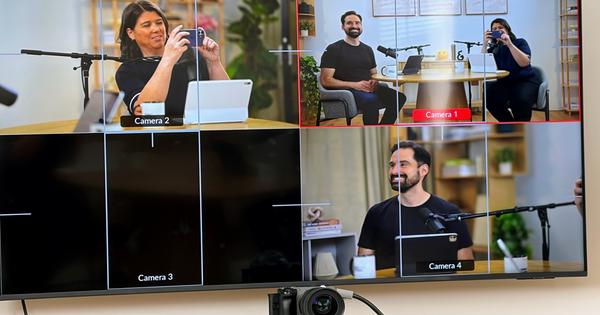
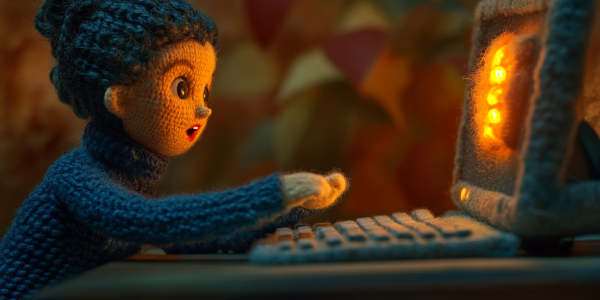
This is part of the reason Chris & I have launched our new podcast Make Great Software (with video!). It’s a discussion show about the timeless, practical principles behind making software that works for people. One principle per episode, each anchored by a story. Plus lots of joy.
Sara Hicks explains what a product manager is and how it’s changed over time, in the best articulation of a squishy and ever-changing role I’ve ever read. Today, she writes, PMs are just builders versus managers. “The job is less about translation between people who have ideas and people who have the tools to execute them, and more about judgment: knowing what’s worth building at all, and remembering why, once you’ve built it.”
NASA software engineer
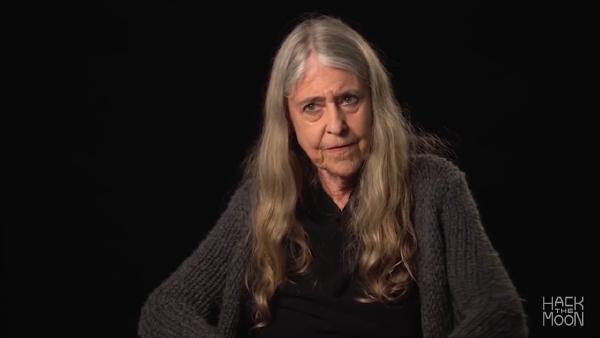
Margaret Hamilton passed away this month at 90 years old. My favorite story about Hamilton is how she found and fixed “the Lauren error,” a software crash caused by her 4-year-old daughter while she was playing astronaut at the flight simulator with her mother at the office.
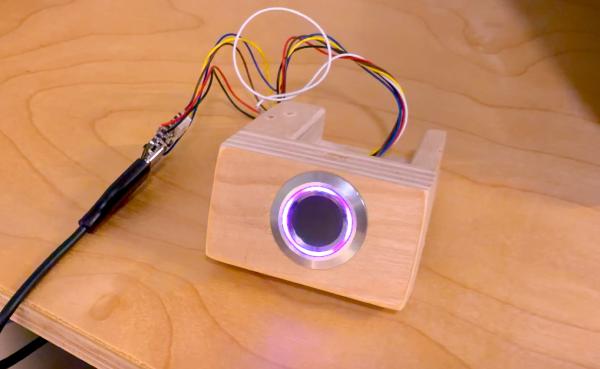
Anil did a nice job building and publishing a fun project: a DIY Touch ID-like fingerprint sensor that can unlock your Mac, called
Dashboard Touch. I liked what he wrote about making it: “Nearly every task in this project has had me stretching to do things that I’m pretty bad at, from firmware coding to security review to detailed carpentry to video editing.” Working at the edge of your capabilities across different skills is the most uncomfortable and satisfying kind of project.
I’ll always be a sucker for great software tools that help people get things done together.
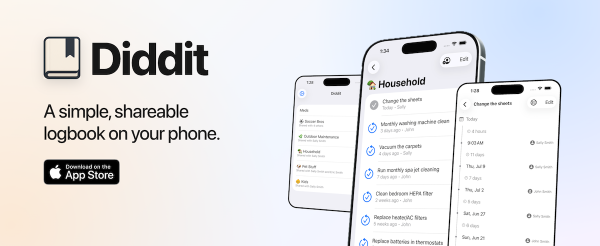
Diddit is a new one from
Chris I’ve been using for a while now. It’s a log of stuff you need to get done every so often. The ones you’d ask a partner, “When was the last time we….?” As in: changed the sheets, cleaned the oven, replaced the filter. The app doesn’t require you to sign up for an account, and it doesn’t store user data—instead, it saves your info in your own iCloud account. I wish more apps were designed this way.
Digital tech has flattened our experience of the world to text under a glass touchscreen, writes Amelia Wattenberger in a beautifully-illustrated essay. We should build more computer interfaces that serve the way humans experience the world—through their five senses.
I think about this idea in terms of how my kid sees me get stuff done. When I was growing up and observing my parents manage our family life, I watched them jot plans on a paper calendar hanging in our kitchen, write checks and stuff stamped envelopes to pay the bills every week, scribble weekly grocery shopping lists, plan a month of family dinners on index cards, keep an address book of names and phone numbers, call their friends on the phone, and spend Saturdays going to the bank, the butcher, and the post office. Today, my kid observes me doing all those different things but has no indicator of what I’m actually doing unless I show her and tell her, because it all just looks like me tapping on a phone screen or typing on my laptop.
It’s the easiest it’s ever been to make software—especially simple apps, single-serving websites, and scripts. This year I’ve been having a blast programming again and I’ve really embraced the idea:
Software is useful even if it has just one user.
This year I put together a few small apps for a single user: myself. They’re not scalable or secure or written to run on public servers or pushed to GitHub or tested beyond my own use case or ready in any way for other users or other programmers. They are all comically simple but help me get something done. They are home-cooked apps, and you’ll just have to believe me when I say they’re delicious.
In the spirit of showing my work—and to remember how and why I made them—here are a few of the things I built just for me in 2025.
- Tri Today: Told me whether and how far I needed to run, bike, swim, lift, or rest today based on my personal triathlon training plan.
- Inbox Cleaner: Charts my daily progress toward an empty inbox against a goal end date, with a leaderboard of most-ignored senders.
- Cover Search: Finds high-resolution cover images for any given TV show, movie, album, book, or podcast.
- Curator: Generates a digest of interesting links, given everything I’ve written about on this website.
I’ve added these to my Projects page, in the hope that others can take the ideas and methods and adapt and expand on them for their own purposes.
Did you make anything small and simple just for you this year? Tell me about it.
My former colleague
Stephen Koch spotted some neat M.C. Escher tile art in a book, and spent a holiday weekend bringing it to the web using SVGs. This fascinating pattern is
made of 4 tiles which repeat, rotated. Set the tile color with the color’s hex code in the URL, like this
pool blue.
You know those 4-box quadrant models consultants overcharge for? I made a little app to easily make one, and collect the ones I don’t want to forget. Which ones did I miss?
I made a new single-page app for fun. Cashkey is an easy way to visualize and share how money comes in and where it goes. I made it because:
- Money is like water: it flows in and out of our lives. Many people don’t know how, though.
- Sankey diagrams are great for visualizing things that flow, but they’re not natively available in spreadsheets.
- Sankey-making apps like the awesome Sankeymatic still require math that’s easy to botch.
Cashkey doesn’t save any data on the server—there is no database involved. Try it and let me know what you think.
My favorite color is blue, but I can’t easily visualize or describe the differences between common shades of blue, like cornflower or cobalt or electric or navy. There are many different kinds of blue! So I built an interactive blue color palette to reference, that I can also quiz myself with to learn.
This was my first jaunt into coding a little tool with AI and it was both fun and frustrating. It didn’t take long to grab the wheel and get into “I’m just gonna finish this myself” mode. Worth the running start, and the world still needs programmers.
I’ve been preoccupied with how to make the most of what little time we get here in this life for as long as I can remember, and it’s only increased with age and brushes with illness. Over ten years ago, this Wait But Why piece by Tim Urban on visualizing the entirety of your life as a finite number of weeks (versus years or months) made a big impression on me.
A week is a short enough time to hold in your head, and long enough time for big things to happen. Then there are eras of your life that span collections of weeks.
At the end of 2024, I was inspired by a few year-end media roundups, like
Soderbergh’s extensive list and a friend who keeps a spreadsheet of every movie she’s ever watched. So I started writing very brief reviews of all the media I consume at
Media Menu. It’s been a rewarding—and sometimes difficult!—practice to write about what I like and what I don’t. I plan to keep this going.
Pay attention to the things that expand your heart. When a person, a work of art, an essay, a film, a song, a photograph intrigues you, makes your chest feel bigger, gives rise to a warm feeling in your body, take note.
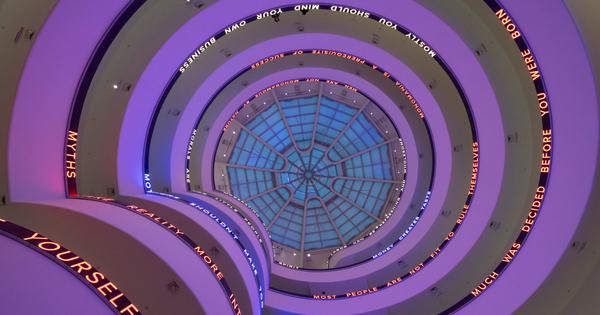
I had these feelings earlier this fall, when I got to visit the Guggenheim for Jenny Holzer’s Light Line exhibit. I’ve loved Holzer’s truisms for years now. I barely felt my feet watching them scrolling across the edges of that gorgeous rotunda in person, the way they did in 1989, except at all 6 levels.